Marigold Dye: The Most Reliable Yellow in the Garden
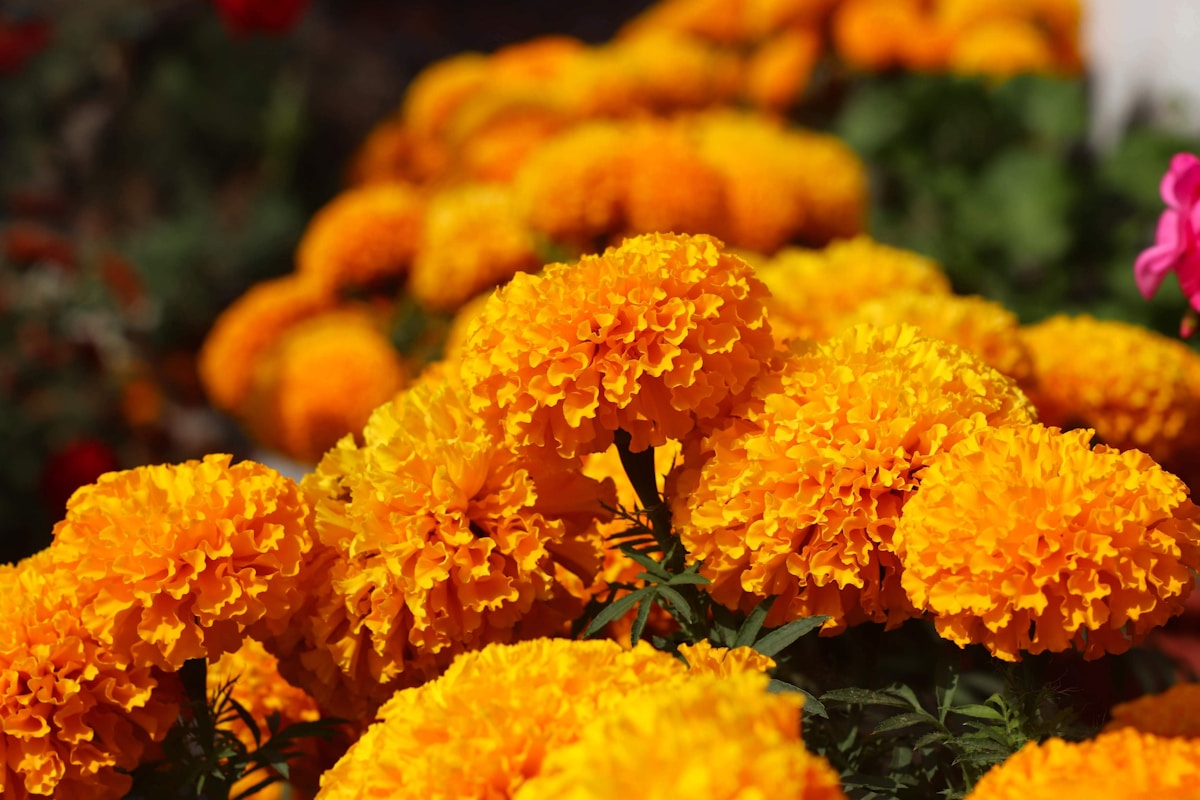
If you want a reliable, bright yellow from a natural dye and you'd like to grow the source yourself, marigold is where to start. It's not the most exotic dye plant in the world, but it's one of the most consistent: plant African marigolds in spring, harvest the flower heads through summer and autumn, and you'll have enough dye material for a full season of dyeing.
The key word there is African marigold — the big, shaggy-headed Tagetes erecta rather than the smaller French marigold (Tagetes patula). Both give yellow, but African marigold gives a stronger, cleaner color that holds up better over time. French marigold tends toward a more muted gold and the dye bath is less concentrated. If you're growing specifically for dyeing, Tagetes erecta is worth the extra space.
Mordanting
Alum is the classic mordant for marigold and gives a clear, warm yellow. The process is the same as most natural dyes: dissolve potassium alum (around 15–20% weight of fiber) in hot water, add your pre-wetted fiber, heat gently to around 80°C for an hour, then lift the fiber out and put it straight into the dye bath.
Iron shifts marigold yellow considerably — toward olive and then quite dark green at higher concentrations. This can be useful if you want to break the sweetness of straight yellow. Add an iron modifier (ferrous sulfate solution, or a rusty nail jar if you're working more loosely) after dyeing rather than in the dye bath itself, so you have control over how far the shift goes.
Copper mordant gives a slightly greener yellow than alum. Tannin pre-treatment improves uptake on cotton and linen, which otherwise don't grab the dye as readily as protein fibers.
Modernhaus follows the thread from raw fiber to finished fabric.
Explore the Textile Studio →Making the Dye Bath
Fresh or dried flower heads both work well, which is useful because dried marigolds store easily and let you dye out of season. Use roughly equal weight of flowers to fiber (1:1 is a good starting point; more flowers means deeper color).
Simmer the flowers in water for about an hour to extract the dye, then strain them out thoroughly. The liquid should be a deep orange-gold. Add your mordanted, wet fiber, bring back to a gentle simmer, and hold there for 45 minutes to an hour. The fiber will come out a warm clear yellow — brighter on wool and silk than on cotton, but good on all of them.
The exhaust bath (the dye liquid after your first batch) gives progressively softer, more complex tones with subsequent dips. Later exhaust baths on alum-mordanted wool often shift slightly more green than the initial batch, which some dyers prefer for its complexity.
Lightfastness
Marigold yellow is reasonably lightfast, especially on alum-mordanted wool — better than hibiscus or some of the more delicate plant dyes, though not as stable as madder or weld. For items that will be in strong sunlight regularly, a tannin treatment before dyeing improves stability. For cushions, wall hangings, or clothing worn occasionally rather than daily, the lightfastness is perfectly adequate.
Combining with Other Dyes
Marigold yellow is a useful base for overdyeing. Yellow over indigo gives green — the depth of the green depends on how much indigo went in first. Yellow over a light woad bath can give softer, more muted greens than indigo overdye. These combinations are worth experimenting with once you're comfortable with the marigold dye process on its own.
The Aztec tradition used marigold — specifically Tagetes erecta, which is native to Mexico — extensively for textile dyeing and for ceremonial purposes. The same plant, grown in the same soil, five hundred years later, giving the same yellow. There is something satisfying about that kind of continuity.