
The Workshop
Traditional craft documented through active practice
Three studios. Three disciplines with roots measured in millennia. The Stone Studio covers lapidary work from rough material to polished finish. The Clay Studio covers ceramics from hand building to wheel throwing. The Textile Studio covers weaving, natural dyeing, and spinning. All three connect to the same material honesty that defined mid-century modern design at its best.
Craft in the Mid-Century Modern Tradition
The designers most associated with mid-century modern furniture were, in many cases, trained craftspeople who understood materials from direct experience. Harry Bertoia worked as a metal sculptor for years before the Diamond Chair existed. Isamu Noguchi trained under Constantin Brâncuși in Paris, learning stone carving before he designed a single table. The Cranbrook Academy of Art — which produced Charles Eames, Florence Knoll, Bertoia, and textile designer Marianne Strengell — operated as a working craft school, not a design theory program.
This material literacy shows in the work. Bertoia's wire chairs require welding knowledge to understand structurally. Noguchi's Cyclone table base emerges from a sculptor's understanding of form under load. Saarinen's fiberglass shells reflect direct engagement with material behavior during development. The design and the craft are not separate activities — the makers who produced enduring work understood both.
The Bauhaus teaching model, which shaped Cranbrook and the broader MCM movement, required students to work in actual workshops under master craftspeople. Walter Gropius insisted students complete workshop training alongside design study — weaving, metalwork, ceramics, woodwork, bookbinding. The resulting designers produced work that held up because they understood how materials behave, where they fail, and what they can do that no other material can.
Anni Albers, who taught weaving at the Bauhaus before emigrating to Black Mountain College, wrote that weaving is fundamentally a study in structure — that understanding how threads interlace produces insights transferable to any material. Her student Jack Lenor Larsen brought that understanding to industrial textile production, creating fabrics used in Saarinen's TWA terminal. The thread runs directly from Bauhaus workshop practice to the chairs and spaces that define mid-century design.
Harry Bertoia
Metal sculptor before furniture designer. Diamond Chair welds drew on a decade of sculptural practice.
Isamu Noguchi
Trained under Brâncuși. Stone carving experience informed every table and lamp he designed.
Anni Albers
Bauhaus weaving master. Proved textiles were a design medium equal to any other.
Marianne Strengell
Cranbrook textile program head. Her woven fabrics upholstered Saarinen's production chairs.
Stone Work & Lapidary
Lapidary work — cutting, grinding, and polishing stone — is among the oldest documented human crafts. Stone tools from the Olduvai Gorge date to 2.6 million years ago. The systematic shaping of stone for jewelry and ceremony appears in archaeological records across every inhabited continent: 100,000-year-old ochre grinding stones in South Africa, intricately carved jades from Chinese Neolithic sites, turquoise cabochons found in pre-Columbian burial sites in the American Southwest.
Modern lapidary centers on the Mohs hardness scale, developed by Friedrich Mohs in 1812. The scale assigns hardness values from 1 (talc) to 10 (diamond) based on scratch resistance. For practical lapidary work, materials in the Mohs 5–7 range — agate, jasper, obsidian, quartz varieties — provide the most accessible starting point. Hard enough to take and hold a proper polish. Workable enough to shape in hours rather than days. The grit progression that takes a cloudy rough surface to transparent polish follows material science principles that apply equally whether the stone formed 50 million years ago or 500 million.
The mid-century connection is direct. Noguchi used stone as both raw material and finished surface in ways that required lapidary knowledge. Peter Voulkos, whose ceramics shaped the Clay Studio's context, worked alongside jewelers and metalworkers at Black Mountain College who applied lapidary techniques to studio objects. The material honesty MCM championed demands understanding stone as a physical material — its internal structure, its fracture patterns, where it will resist and where it will give.
The Stone Studio covers the complete lapidary process: selecting rough material and understanding what internal structure means for workability, slabbing with a trim saw, shaping on grinding wheels, progressing through grits from coarse shaping to pre-polish, and achieving final surface clarity with cerium oxide or diamond compound. The focus throughout is on understanding why each stage works — the materials science behind grit progression, why heat causes irreversible surface damage, what determines whether a stone can achieve high polish or merely a soft sheen.
The Stone Studio
Cabochon cutting, rock tumbling, lapidary workshop setup, stone identification, and grit progression — documented from the first cut to the finished piece.
Ceramics & Clay Work
Fired ceramic objects are the oldest manufactured materials in continuous production. Animal figurines from Dolní Věstonice in the Czech Republic — fired clay objects recovered from a kiln site — date to approximately 29,000 years ago. The potter's wheel appeared around 3500 BCE in Mesopotamia, enabling production consistency and volume that hand building alone cannot match. Both approaches remain in active use today for reasons that have nothing to do with tradition and everything to do with what each technique produces.
Clay undergoes a chemical transformation during firing that makes the process irreversible. Wet clay in its plastic stage contains water within the clay particles themselves, not just on the surface. Drying removes free water, producing bone-dry clay that can still be rehydrated and reworked. But firing above approximately 573°C triggers permanent structural change: crystalline silica converts between polymorphic forms, and at higher temperatures the clay minerals transform into new crystalline structures entirely. A fired piece is fundamentally different material from the raw clay it started as. It cannot be rewet. It cannot be reshaped. It is permanent.
The mid-century ceramic tradition produced some of the most significant work of the period. Russel Wright's American Modern dinnerware brought modernist form to mass production — by 1950, it was estimated that one in three American homes contained a piece. Eva Zeisel's organic forms demonstrated that functional pottery could achieve sculptural quality without compromising utility. Peter Voulkos treated clay as an expressive medium equal to any fine art material, breaking with both the utility tradition and the refinement tradition simultaneously. These were not decorators. They were makers who understood the material.
The Clay Studio covers three approaches to ceramic work: air dry clay for immediate results without firing equipment, hand building techniques that predate the wheel by thousands of years (pinch pots, coil building, slab construction), and wheel throwing for symmetrical forms. Each technique has specific applications, specific limitations, and specific things it does that the others cannot.
The Clay Studio
Air dry clay, hand building, and wheel throwing — from the first pinch pot to production throwing. The complete ceramic craft documented through practice.
Textiles, Weaving & Natural Dye
The oldest preserved textile fragment, found at Çatalhöyük in Turkey, dates to approximately 9,000 years ago. Evidence of fiber preparation — spindle whorls and other spinning tools — predates preserved textiles by tens of thousands of years. The development of woven fabric is among the most consequential technological achievements in human history, enabling clothing suited to cold climates, portable trade goods, and decorative arts that communicated identity and belief across cultures with no shared language.
Natural dyeing has an equally deep history. Woad, a plant producing blue dye, was cultivated in Europe in prehistoric times. Indigo has been used in India for at least 6,000 years. Cochineal — a red dye extracted from scale insects on Opuntia cacti in Mexico — became one of the most valuable trade commodities in the 16th-century Spanish colonial economy, second only to silver. The Aztec Empire collected cochineal as tribute. Spanish merchants kept the source secret from European competitors for over a century. A dye plant or insect capable of producing fast, brilliant color was genuinely valuable property.
The mid-century connection runs through the Cranbrook Academy's textile program. Marianne Strengell, who led that program from 1942 to 1961, trained weavers who produced fabrics for Saarinen's chairs, Eames's interiors, and corporate spaces that defined the aesthetic of postwar America. Dorothy Liebes, working in San Francisco, developed a weaving vocabulary that incorporated metallic threads, unconventional materials, and bold color in ways that proved handwoven textiles could participate fully in contemporary design rather than existing as nostalgic reference. Anni Albers, whose Bauhaus work preceded both, established the theoretical framework: weaving is structure, and structure is design.
The Textile Studio covers rigid heddle weaving — the most accessible entry point to hand weaving, capable of producing functional fabric for scarves, towels, and yardage — alongside natural dyeing using plant-based colorants (indigo, weld, madder, black walnut, onion skin) and spinning fiber into yarn. The natural dye work connects directly to the history: many of the plants used today are the same plants documented in medieval dye manuals, producing color through processes unchanged since their discovery.
The Textile Studio
Rigid heddle weaving, natural dyeing, and spinning — from the first warp to naturally dyed finished fabric. The complete textile craft documented through practice.
Documentation Through Practice
Craft knowledge lives in practitioners, not in descriptions of practitioners. A guide to cabochon cutting written by someone who has completed hundreds of cabochons differs from one assembled from other written sources — not in the facts presented, but in what it knows to include. Heat damage to stone looks, feels, and faintly smells different before it becomes visible as surface whitening. Leather-hard clay and bone-dry clay feel different in a way that matters for joining decisions but resists precise description. The difference between warp tension that works and warp tension that will cause problems two hours into a weaving session is detectable by feel before it produces visible defects.
The documentation in these studios reflects what actually happens during the work: what fails and why, how long things genuinely take rather than how long optimistic instructions suggest, which equipment decisions matter versus which ones are less consequential than they appear. The mid-century designers understood their materials this way. The work here attempts the same standard.
Recent from the Workshop
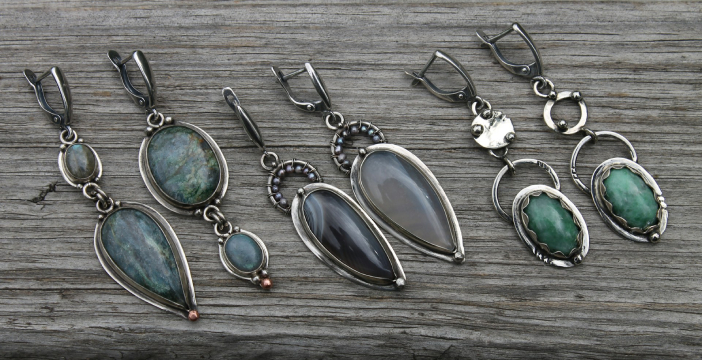
Making Cabochons: Complete Process
The full journey from rough stone to polished gem — grit progression, equipment, and the science behind a proper polish.
Read more →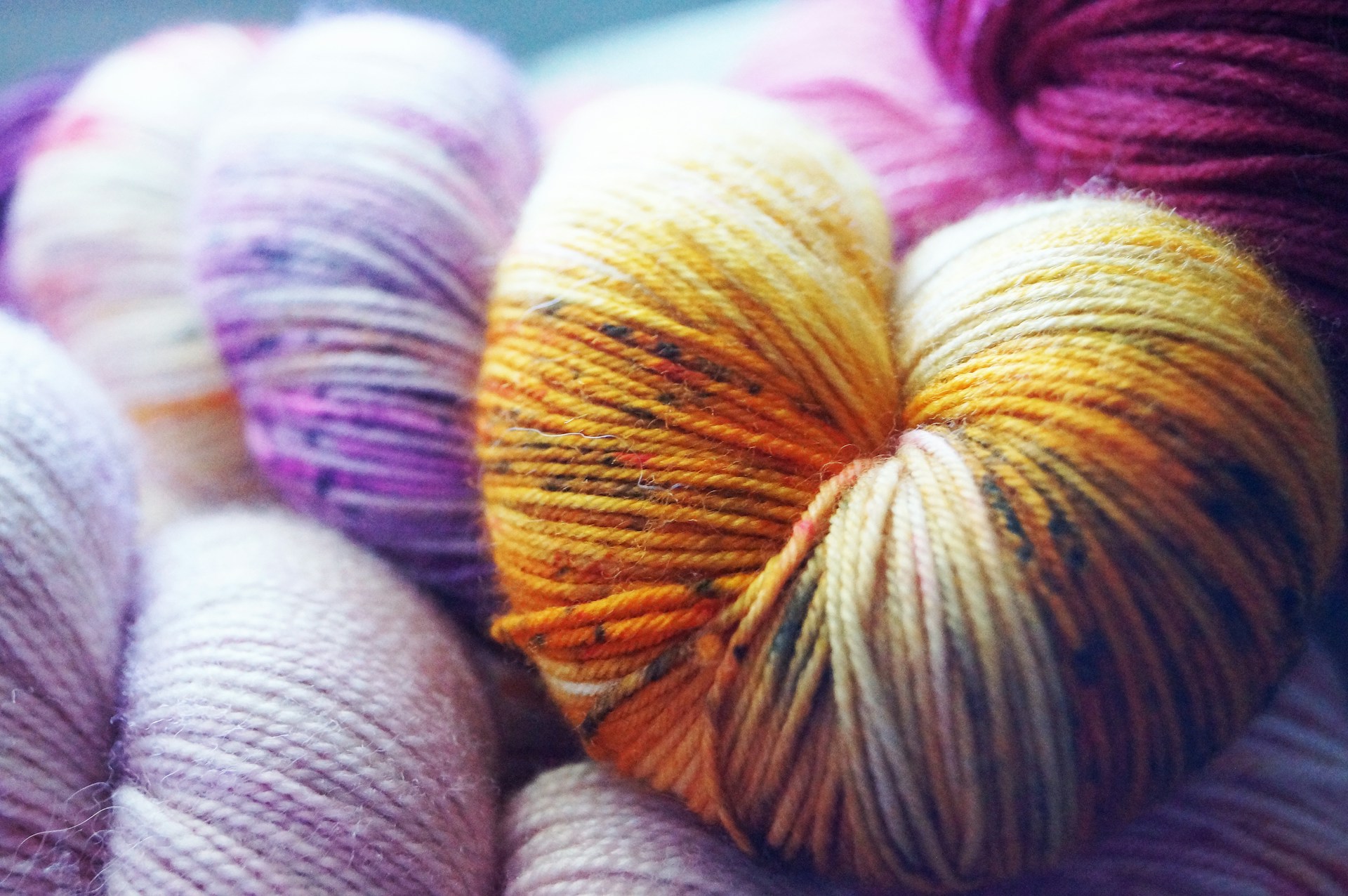
Natural Dye Mordants Explained
What mordants do chemically, which ones work with which dyes, and why skipping this step produces color that fades.
Read more →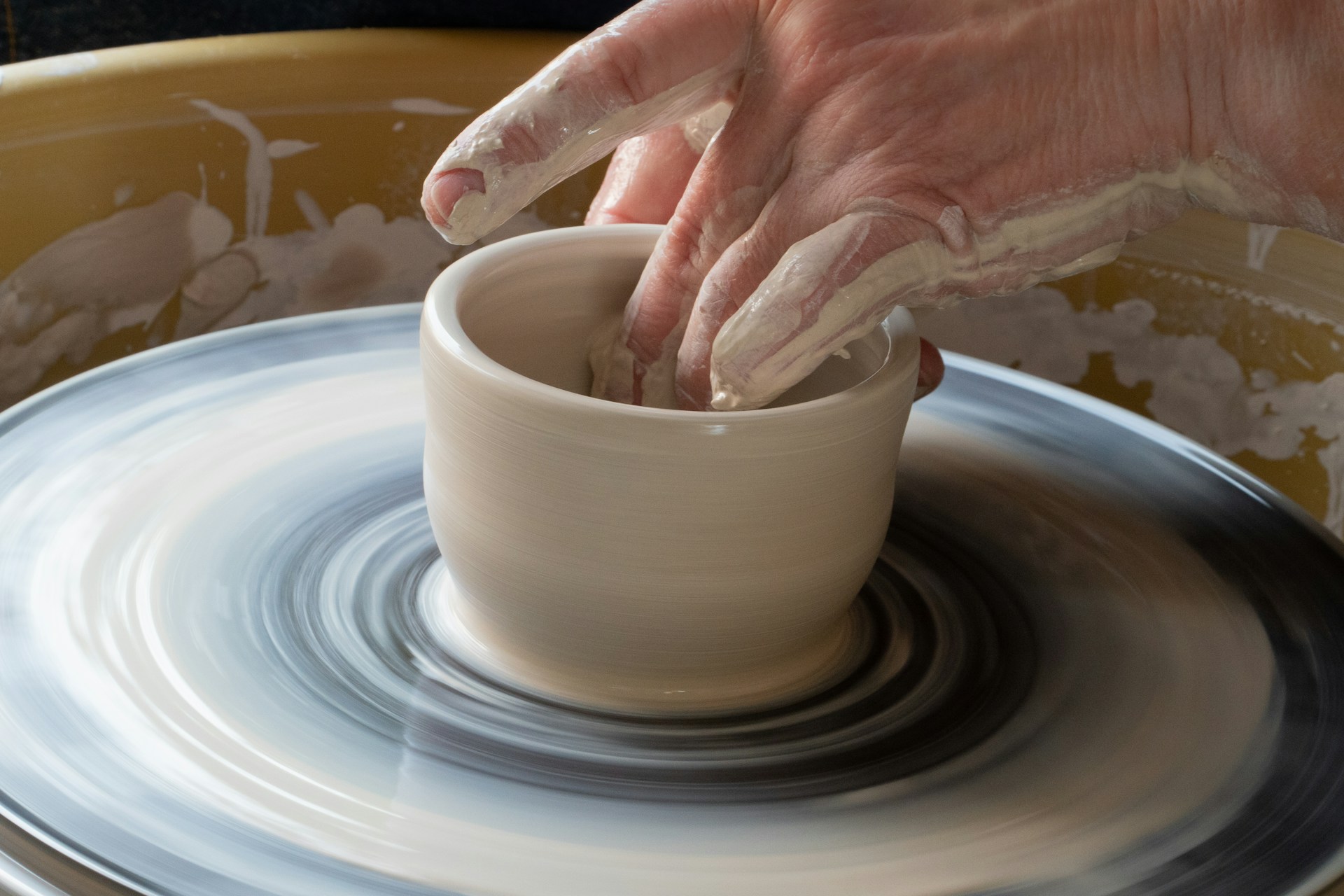
Hand Building Clay Techniques
Pinch pots, coil building, and slab construction — the three hand building methods and what each one produces.
Read more →