Twill Weave: The Structure Behind Denim, Herringbone, and Harris Tweed
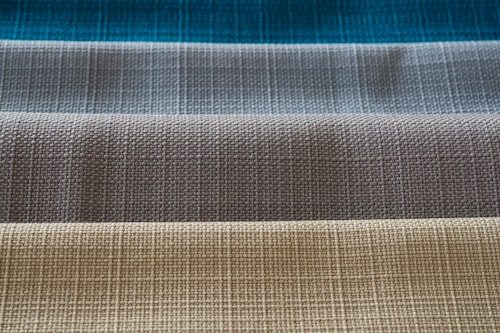
Every pair of jeans in the world is a twill. So is the fabric of most suit trousers, the fleece lining of winter jackets, and the canvas of most military uniforms made in the twentieth century. Twill is the second most common weave structure after plain weave, and it has been in continuous production for at least three thousand years. The Romans wore it. The Vikings wove it. The mills of Lancashire industrialized it in the eighteenth century and turned it into the material backbone of empire.
The structure is simple to describe and complex to execute well. In a plain weave, each weft thread passes over one warp thread, then under one, alternating across the full width of the cloth. In a twill, the weft passes over two or more warp threads before going under one (or under two, then over one, depending on the variant), and each successive row shifts the sequence one thread to the left or right. That offset is what creates the diagonal line — called the twill line — that runs across the surface of the fabric.
What the Diagonal Does
The diagonal does several things. It makes the fabric denser and heavier than a comparable plain weave at the same thread count. It makes it more drapeable — twills hang and move where plain weave tends to hold its shape. It creates a surface that sheds water better than plain weave, which is why twill became the default structure for outerwear and workwear. And it produces a fabric with a distinct face and back: one side carries more warp, the other more weft, and they look and behave differently.
Denim is a warp-faced 3×1 twill: the weft passes under three warp threads, then over one. Because the warp thread dominates the surface and historically the warp was dyed indigo while the weft was left undyed, the face of denim is blue and the back is white. As the fabric wears, the surface threads abrade and the undyed weft shows through — which is why denim fades the way it does, producing the specific pattern of wear that has made it both a workwear staple and a luxury commodity.
Modernhaus follows the thread from raw fiber to finished fabric.
Explore the Textile Studio →Herringbone and Other Variants
Herringbone — the V-shaped pattern that appears in wool jackets and Harris Tweed — is a twill that reverses direction at regular intervals. The diagonal goes one way for a few repeats, then flips. The name is literal: the alternating chevrons resemble the skeleton of a herring.
Broken twill introduces deliberate interruptions in the diagonal sequence, softening the line and producing fabrics like denim's left-hand twill variants. Houndstooth combines twill structure with two-color threading to produce the distinctive four-pointed star pattern. Gabardine — the fabric of Burberry trenches — is a steep twill with a very tight weave count that creates a faint diagonal rib barely visible to the naked eye.
Twill on a Rigid Heddle Loom
A standard rigid heddle loom only has one shed, which limits it to plain weave without modification. Twill requires multiple shafts to control which warp threads rise on each pass. A four-shaft floor loom or table loom is the standard tool for weaving twills.
However, there are ways to approximate twill effects on a rigid heddle using pick-up stick weaving: a flat stick inserted into the warp selectively lifts threads to create supplementary sheds. The results are slower to produce and less consistent than shaft-controlled twill, but they are achievable and recognizable. Rigid heddle weavers who want to explore twill structures typically do so as a stepping stone toward acquiring a multi-shaft loom — or they use tablet weaving, which creates twill structures through a completely different mechanism.
Sett and Weight
Twill fabrics typically need a closer sett (more threads per inch) than plain weave at the same yarn weight to achieve the same cloth density, because more warp threads float over the surface and need support. Getting the sett wrong in a twill produces fabric that either won't hold its structure or won't beat down properly. It is one of the more technically demanding aspects of the structure and the reason twill weaving is generally considered an intermediate skill — not because the threading is difficult, but because the relationship between sett, yarn weight, and finished hand is less forgiving than plain weave.
The mill workers of Lancashire figured all of this out by trial and error over generations. The equipment they used was mechanical. The calculations they carried in their heads were considerable.