How to Ply Yarn: The Twist That Makes Handspun Look Intentional
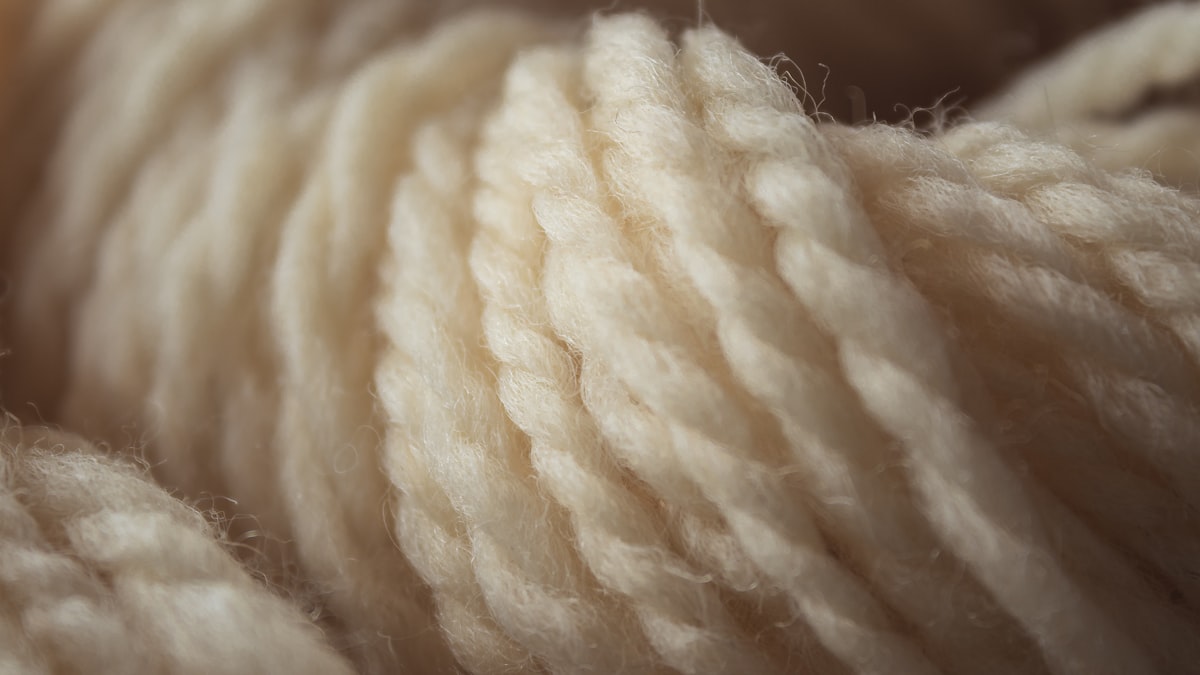
When you spin a single, you're adding twist in one direction — usually clockwise, which is called Z-twist — to draft fibers together into a thread. That single works. You can knit with it, weave with it, use it as-is. But it has a strong tendency to keep twisting: hang a length of it from a finger and it will spin itself into a kinked, tangled mess before you can blink. The energy is in there, coiled up, waiting.
Plying releases it. You take two or more singles and twist them together in the opposite direction — counterclockwise, S-twist — and those two opposing energies balance out. The singles unwind a little; the ply tightens up. Done right, you end up with yarn that hangs perfectly still, doesn't bias on the needles, and has a round, even structure that single yarn rarely achieves.
That's the physics of it. The feel of it is rather wonderful: when you get the balance right, the yarn seems to relax. It goes from tense and springy to calm and smooth in a way that's satisfying in a way that's hard to explain until you've done it.
What You Need
The basic setup for plying on a spinning wheel is: two bobbins of singles on a lazy kate (a simple frame that lets them unwind freely), and an empty bobbin on the wheel for the plied yarn. You spin the wheel in the opposite direction from your singles — so if you spun Z, you ply S — and feed the two singles together through your fingers, letting them twist around each other as they go onto the bobbin.
Your job with your hands is to control the rate the singles feed in. Too much twist going in and you'll over-ply — the yarn becomes stiff and corded. Too little and it'll be under-plied, still unbalanced, and the singles will show through loosely. The sweet spot is when the two strands twist around each other at roughly 45 degrees.
The easiest way to check: let a few inches of yarn hang from your fingers with no tension. If it hangs still, you've got it. If it twists back on itself (in the Z direction), you're under-plied and need more twist. If it over-twists (S direction), you've put in too much.
Modernhaus follows the thread from raw fiber to finished fabric.
Explore the Textile Studio →Plying on a Drop Spindle
If you spun your singles on a drop spindle, you ply on a drop spindle too. Wind your singles into two small balls (or onto two small spindles), hold both ends together, and spin the spindle in the opposite direction from how you spun the singles. The motion is the same as spinning — park and draft, or supported spindle — just reversed.
Drop spindle plying is slower than wheel plying, but it's very good for small amounts and for getting a feel for how ply twist actually behaves, because you can stop and check the angle at any point.
Chain Plying
Chain plying — also called Navajo plying — is a way to ply a single bobbin of yarn without needing two. You make a loop in the yarn and draw another loop through it, like a crochet chain, then spin those three strands together as a three-ply. The result is a three-ply yarn from a single bobbin, and it keeps color sequences in long-draw spinning together (rather than mixing two bobbins that might be at different points in a color gradient).
The technique takes a little practice to get smooth but is genuinely useful, especially for handpainted fiber where you want to preserve the color order.
After Plying: Washing
Once you've plied the yarn, wind it off the bobbin into a skein (a niddy noddy is the traditional tool, a chair back or the back of a book works fine) and wash it. Washing sets the twist — it relaxes the fibers and allows the yarn to stabilize into its final structure. For wool, use warm water and a gentle squeeze, no agitation, then press out the water in a towel and hang the skein to dry with a little weight at the bottom to prevent it crimping.
After washing, the yarn will feel completely different from how it did on the bobbin: softer, fuller, more settled. The plied structure will have opened up slightly. This is the yarn you'll actually use, and it's usually a genuine improvement on what you had when you thought you were done.
The Satisfaction Factor
There's something about plying that feels like the completion of a process. When you spin a single, you've done the technical work — drafting the fiber, managing the twist — but the yarn doesn't quite feel like yarn yet. After plying, it does. It has weight, drape, a proper round cross-section. You can hold it up and see exactly what you've made.
It's also where a lot of the irregularities in your singles become assets: thick-and-thin handspun, which can look rough as a single, turns beautiful as a ply because the two strands complement each other, the thick parts of one sitting against the thin parts of the other. Perfection isn't really the goal in handspinning. Balance is.