Pit Firing: The Oldest Kiln Is Just a Hole in the Ground
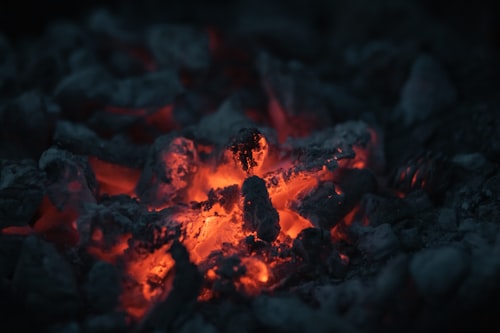
The pit firing is not a technique so much as the absence of technique. It requires a hole, fuel, pots, fire, and patience. There is no kiln, no controller, no pyrometer, no atmosphere dial. The maximum temperature a wood-fired pit reaches — perhaps 1,400°F under good conditions — is lower than the minimum firing temperature of most vitrified ceramics. The pots that come out are not watertight. They are not food-safe without additional sealing. They are, by the standards of industrial ceramics, primitive.
They are also frequently breathtaking.
The Archaeology
The oldest fired ceramics found so far — fragments from Xianrendong Cave in China, dated to approximately 20,000 BCE — were almost certainly pit fired. The technology predates agriculture. Before humans built permanent settlements, before they had fixed kiln structures, they understood that clay hardened in fire. The pit concentrated the heat and protected the pots from direct flame long enough to complete the transformation.
Pit-fired pottery appears in the archaeological record of every inhabited continent. The specific techniques vary — some traditions bury the pots entirely in embers, some layer combustibles between pots, some cover the pit with earth, some leave it open — but the basic principle is constant. You put clay objects into a combustion event and retrieve ceramic objects afterward.
Modernhaus documents studio pottery from wheel to kiln.
Explore the Clay Studio →What Happens in the Pit
The colors and patterns on pit-fired work come from two sources: the materials burned with the pots, and the way flame and smoke moved through the pit.
Sawdust produces soft, smoky carbon markings. Copper filings or copper carbonate salts, placed in direct contact with the clay or wrapped around the pot in foil, produce flashes of pink, red, and turquoise through chemical reduction during cooling. Iron compounds produce yellows, oranges, and blacks. Organic materials — seaweed, banana peels, coffee grounds, horse manure — carbonize and leave their shapes on the surface, sometimes as distinct impressions, sometimes as ghost traces of color.
The potter can influence but not control these marks. Packing specific materials next to specific areas of a pot creates tendencies. It does not create certainties. The fire decides.
This relationship to uncertainty distinguishes pit firing from most studio pottery practice, which involves calculated variables and reproducible results. It is closer in spirit to raku pottery — another technique where the potter deliberately relinquishes control at a critical moment — than to cone-10 reduction stoneware.
Surface Preparation
The surface quality of the clay body matters more in pit firing than in kiln firing because there is no glaze to cover or transform the clay. Burnishing — polishing the leather-hard clay to a high sheen with a smooth stone or the back of a spoon — produces a surface that, after pit firing, takes on a depth and luminosity that unfinished clay cannot achieve. Terra sigillata, the refined clay slip used by Roman potters, produces similar effects and is frequently used in contemporary pit firing for exactly this reason.
Pre-firing slips of iron oxide, cobalt, copper, or manganese applied to specific areas create additional color potential. They interact with the combustion atmosphere in ways that kiln-fired slips do not.
The Modern Practice
Contemporary ceramic artists working with pit firing are generally doing something different from ancient utility: they are making objects for their visual qualities rather than their functional ones. The technique is a design tool, and the unpredictability is part of the design.
The connection to burnished pottery is direct — most serious pit firing involves burnished surfaces. The connection to raku is philosophical — both involve fire as a collaborator rather than a controlled variable. The connection to earthenware is structural — the low temperatures of pit firing produce earthenware-range results, porous and non-vitrified.
The pit firing is perhaps thirty minutes of setup, several hours of burning, many hours of cooling, and then whatever comes out. Most potters who try it find it clarifying. The kiln gives control. The pit gives back the thing control was traded for.