Raku Pottery: Two Traditions That Share a Name and Almost Nothing Else
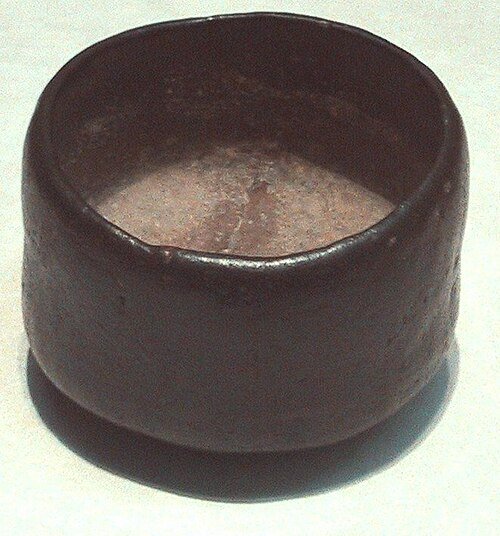
There are two things called raku pottery, and they have so little in common that using the same word for both is almost a geographical accident of translation.
The original is Japanese, and it is slow. A single family in Kyoto, the Raku family, has been making raku tea bowls continuously since the sixteenth century. The current head of the family is the sixteenth Raku, and the tradition is so precisely maintained that each generation produces work that sits in direct conversation with the bowls Chojiro made for Sen no Rikyū's tea ceremonies in the 1580s. The bowls are hand-formed without a wheel, fired at low temperatures in a small clay kiln, cooled slowly, and they are quiet objects: thick-walled, matte, irregular, designed to fit the hands and slow the mind.
The Western version was invented in California in the 1960s by a ceramicist named Paul Soldner, who read about Japanese raku in a book, misunderstood the process, and created something entirely his own. Western raku involves throwing pots on a wheel, firing them in a small gas kiln to around 1000°C, then pulling the glowing-hot pieces out with metal tongs and placing them directly into a metal bin filled with combustible material — newspaper, straw, sawdust — which ignites on contact, fills the bin with smoke, and produces the characteristic metallic lusters, crackled glazes, and blackened clay bodies that Western raku is known for.
It produces exciting surfaces. It is also genuinely dangerous if you don't know what you're doing, and it has almost nothing to do with the Japanese tradition it's named after.
The Original: Kyoto, 1580s
Raku began with a Korean tile-maker named Chojiro who settled in Kyoto and began making tea bowls for Rikyū's tea ceremony practice. Rikyū was developing what became the wabi-cha aesthetic: the tea ceremony as an encounter with impermanence, simplicity, and the beauty of things that are irregular and imperfect. The bowls Chojiro made were the material embodiment of this: hand-built rather than thrown, asymmetrical, with a tactile roughness and weight that made them feel more like earth than like ceramics.
Toyotomi Hideyoshi gave the family the seal reading "raku" — meaning comfort, ease, pleasure — and the name became both the family name and the name of the style. The Raku family has held unbroken continuity since: fifteen generations, each one training their successor, maintaining the tradition with a fidelity that is unusual even in Japan's culture of craft transmission.
The bowls are not decorative objects. They are made to be used, to hold tea, to be turned in the hands, to register the warmth of the liquid inside. The irregularities are not flaws; they are where the maker's hands were, and they are how the bowl meets the user's hands in return.
Modernhaus follows the thread from raw fiber to finished fabric.
Explore the Textile Studio →The Glaze Problem
Japanese raku uses simple lead glazes — historically, before lead's toxicity was understood — applied thinly over the rough clay body. The surface is matte and subdued, often in deep black, dark red, or white. The firing is in a small, enclosed clay kiln, and the cooling is slow.
Western raku uses commercial low-fire glazes, often formulated specifically for the reduction effects that the newspaper-bin process produces. The metallic lusters and the random craze patterns in the glaze come from the rapid cooling and the carbon-rich smoke environment. The clay body blackens in the unglazed areas because carbon penetrates the still-open pores during cooling.
The surfaces are spectacular in a way that is almost the opposite of traditional raku's quietness. Western raku pieces catch light, have complex metallic surfaces, and wear their making process visibly. Traditional raku pieces absorb light and ask you to look closely and slowly.
What the Tea Bowl Knows
The tea ceremony context matters to understanding why Japanese raku looks the way it does. In the wabi-cha tradition, the aesthetic of the tea room, the utensils, the garden, and the ceramics all work together to produce a particular state of attention. A tea bowl that is too regular, too perfect, too obviously skilled is a distraction: it asks you to admire the making instead of the moment.
The raku bowl's irregularities give the eye nowhere to rest and the mind nothing to evaluate. You hold it, you feel its weight and warmth, you drink from it, and then it goes back on the shelf. The bowl has done its job when you stop noticing it.
This is the opposite of what most Western ceramics — and most Western raku — are designed to do. The bin-and-flames process produces objects you cannot stop noticing. That's not a criticism; it's just a different thing.
Making Western Raku
The practical reality of Western raku is that it happens outdoors, requires protective equipment, and produces the kind of experience that studio pottery courses offer specifically because it is immediate and dramatic. You throw a pot, dry it, glaze it, fire it in a small portable kiln for less than an hour, pull it out glowing orange with tongs, drop it in the combustible material, slam the lid down, and wait for the smoke to clear. What comes out is genuinely unpredictable and genuinely different every time.
The craze patterns in the glaze are caused by the rapid thermal shock of moving from kiln temperature to room temperature in seconds. The metallic lusters come from metallic oxide glazes reducing in the oxygen-depleted smoke environment. The black clay body comes from carbon absorption through the open clay pores before the surface seals on cooling.
None of this can be precisely controlled, which is either the frustration or the point, depending on your temperament.
The two traditions share a word and a respect for the impermanent, unpredictable nature of fire. Everything else about them is different. Which is itself quite interesting.