Goldenrod Dye: The Yellow That Gets Blamed for Ragweed's Crimes
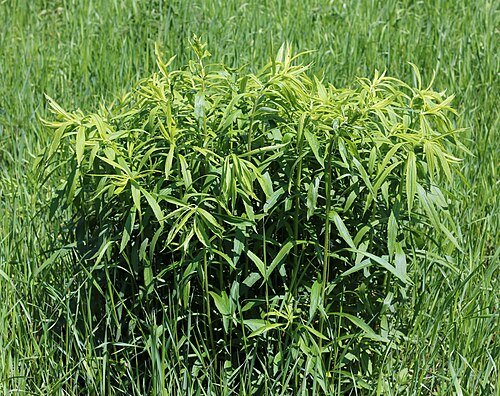
Every August and September, across most of North America, goldenrod comes into bloom, sending up its arching plumes of small yellow flowers along roadsides and in meadows and at the edges of fields. And every August and September, millions of people blame it for their runny noses and itchy eyes and attribute to it the misery of late-summer allergies.
Goldenrod does not cause hay fever. Ragweed causes hay fever. Ragweed (Ambrosia artemisiifolia) flowers at exactly the same time and in the same places as goldenrod, but its flowers are tiny, greenish, and entirely unremarkable. Nobody notices ragweed. Everyone notices goldenrod's bright yellow presence. The coincidence in timing has sustained one of the most durable cases of mistaken botanical identity in North American history. Goldenrod is pollinated by insects, not wind, which means its pollen is heavy, sticky, and almost never airborne. It's pharmacologically blameless.
This matters to the natural dye community because goldenrod spent decades with a reputation problem, shunned by people who thought proximity to it would make them sneeze. Those people were avoiding one of the most useful and beautiful yellows in the late-summer dye plant palette.
The Color
Solidago canadensis and its many related species across the genus produce a warm, golden yellow on mordanted wool that sits in a different register from the cooler yellow of weld or the more orange yellow of onion skins. Goldenrod yellow is rich and warm, something between gold and amber, with a depth that synthetic yellows struggle to match.
Alum mordant produces the clearest, brightest expression of the color. Copper saddens it slightly toward a more complex, green-gold. Iron takes it deeper toward olive and khaki, the "saddening" effect familiar from other natural dye work. On protein fibers like wool and silk the color is vivid and saturated; on cotton and linen it's somewhat paler but still worthwhile with proper tannin pre-treatment.
Lightfastness is good to very good with alum mordanting: better than turmeric, comparable to onion skins, not quite in the exceptional class of madder or black walnut. For most interior textile applications and garments, goldenrod yellow holds its character well through washing and moderate light exposure.
Modernhaus follows the thread from raw fiber to finished fabric.
Explore the Textile Studio →When to Gather
This is a dye plant with a season, and the timing matters. Goldenrod is gathered when the flowers are just coming into full bloom, typically late August through September depending on latitude. The whole above-ground plant, flowers, leaves, and stems, is used. The flowers are the most potent part for dye purposes, but the stems and leaves contribute volume and some additional color compounds.
At this stage the plant is at its peak concentration of quercetin and other flavonoid dye compounds. Earlier in the season, before the flowers open, the concentration is lower. After the flowers have finished and gone to seed, the available dye diminishes.
You use a high ratio of plant material to fiber: a lot of goldenrod to a modest amount of wool gives the best color. The plant compresses down considerably in the dye pot, so gathering enough of it takes a meadow walk with a gathering bag rather than a handful from a single plant.
A North American Tradition
Native American textile and craft traditions across much of North America used goldenrod as a dye, and the range of documented uses is wide: for wool, for basketry, for body paint, for dyeing deer hide. The Navajo dye tradition includes goldenrod as one of its yellow sources. The Cherokee used it. Many nations in the Northeast and Great Lakes regions documented its use.
This pre-contact tradition makes goldenrod one of the more distinctly North American natural dye plants, alongside black walnut and a handful of others. The European natural dye tradition came with settlers who already had their yellows, primarily weld and onion skins, but the Indigenous dye knowledge around goldenrod represented an independent discovery of a useful local resource.
The Late-Summer Dye Session
There is something specific about a goldenrod dye session: the timing, the gathering walk in late summer heat, the stems bright yellow in the dye pot, the whole studio smelling faintly of warm vegetation. The color that comes out is the color of the season it belongs to, a warm late-summer gold that seems to contain a little bit of the light that was in the field when the flowers were gathered.
Natural dyeing tends to produce colors that feel right in the moment you're making them, connected to the season and the local plant material in a way that makes the color meaningful beyond its optical qualities. Goldenrod yellow is late August yellow, which means something to anyone who has made it, regardless of whether they can explain exactly why.
The plant that doesn't cause your allergies will give you one of the best yellows of the year. Ragweed gets the blame and goldenrod gets to be useful, which is not a bad arrangement.