Natural Dye Red: Madder, Cochineal, and the Color That Built Empires
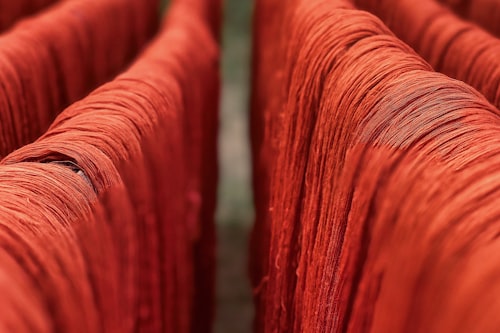
Red was the color armies wore. It was the color cardinals and emperors reserved for themselves. It was the color that merchants smuggled, governments taxed, and chemists spent two centuries trying to replicate cheaply. Before synthetic dyes arrived in the nineteenth century, producing a reliable, lightfast red on cloth required either madder root or cochineal insects, and both came at considerable cost and logistical complexity.
The two sources are botanically and chemically unrelated. They share only the color they produce and the historical weight that color carried.
Madder
Madder — Rubia tinctorum — is a plant. The dye comes from the roots, which are harvested after three years of growth, dried, and ground into a reddish-brown powder. The active molecule is alizarin, and it bonds to protein and cellulose fibers through a mordant — alum being the standard, producing the clear Turkey red that colored Ottoman carpets and British military coats alike.
The color is variable in ways that are difficult to fully control. The same madder root can produce brick red, rust, orange-red, pink, or deep crimson depending on the mordant used, the mineral content of the water, the temperature of the dye bath, and whether the fiber was given a chalk or iron afterbath. This variability was both a frustration and a resource — dyers who understood the chemistry could produce a range from one dyestuff; those who didn't produced inconsistent batches.
Madder cultivation sustained regional economies across Europe and the Middle East for centuries. The Dutch madder industry in Zeeland and Zealand was a major agricultural and commercial enterprise from the sixteenth through the eighteenth centuries. French Alsatian madder was different enough from Dutch madder that dyers preferred one for specific applications. When synthetic alizarin — chemically identical to the molecule in madder root — became commercially available in 1868, the madder industry collapsed within a decade.
The details of mordants matter enormously with madder. Alum produces the warm red. Iron shifts it toward brown. Tin brightens it toward scarlet. Chrome deepens it toward burgundy. The same bath, different metal, different cloth. This is one reason historical dye recipes are complex documents full of intermediate steps.
Modernhaus follows the thread from raw fiber to finished fabric.
Explore the Textile Studio →Cochineal
Cochineal is an insect — Dactylopius coccus — that feeds on prickly pear cacti (Opuntia species) native to Mexico and Central America. The female insect, killed and dried, contains carminic acid, a molecule that produces intense purplish-red shades on protein fibers (wool, silk) with alum mordant, and shifts through crimson, scarlet, and orange depending on pH, mordant, and fiber type.
The Aztecs were cultivating cochineal at scale before Spanish contact. The Spanish recognized immediately that this was worth controlling and did so — keeping the source of the red secret for nearly a century after conquest. The rest of Europe understood that cochineal produced the finest reds available and that it came from somewhere in the Spanish Americas, but did not know it was an insect until the mid-seventeenth century. Various theories — seeds, berries, grains — circulated in the interim.
When the secret emerged, the reaction was apparently disgust followed quickly by continued purchase. The color was too good to abandon on principle.
Cochineal produces about ten times more dye per weight than madder. It is more lightfast on wool and silk. The crimson of Renaissance paintings — executed by dyeing wool tapestries and hanging them in churches — relied on it. British military scarlet shifted from madder-based to cochineal-based in the seventeenth century.
The Chemistry After the Fact
Both madder and cochineal dye molecules are anthraquinone-based, which is why both produce colors in the red-to-orange range and both mordant similarly. The structural similarity was not understood until the nineteenth century, when chemists began breaking down natural dye molecules and attempting synthesis.
William Perkin's accidental discovery of mauveine in 1856 — while trying to synthesize quinine — opened synthetic dye chemistry. Synthetic alizarin followed twelve years later. Synthetic carmine took longer; cochineal remained the primary source of carminic acid well into the twentieth century for food coloring and cosmetics, a use that continues today. The dye that colored military uniforms for three centuries now appears on the ingredient lists of fruit juice and lipstick.