Cochineal Dye: The Insect Spain Kept Secret for 200 Years
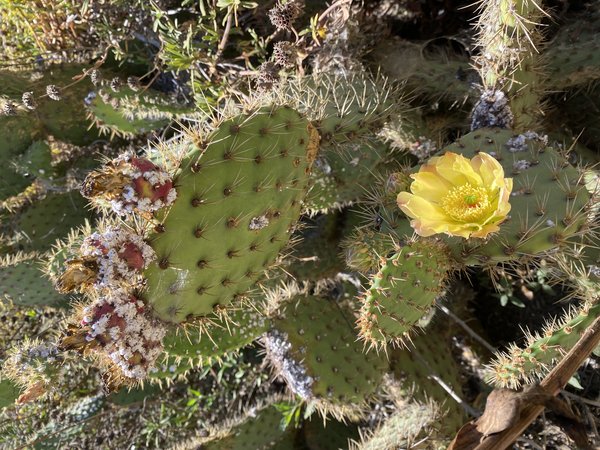
When Hernán Cortés arrived in Mexico in 1519, among the things that caught the Spanish eye was a red. Not the muddy crimson of European madder, which faded and shifted and required careful mordanting to hold its hue, but a red so saturated and stable it looked almost synthetic. The Aztecs called the source "nocheztli." The Spanish called it "grana cochinilla." By 1600, it was the second most valuable export from New Spain, behind only silver.
For two hundred years, the Spanish kept the source a secret.
Merchants across Europe knew the red existed. They bought it in powder form from Spanish traders, paid extraordinary prices, and tried to figure out what it was. The guesses ranged from a type of berry to a seed to fish eggs to a mineral deposit. The Spanish, who understood exactly what they had, were happy to let the speculation continue.
What It Actually Was
Dactylopius coccus is a scale insect, related to the mealybugs you find on houseplants. The females, which are the useful ones, spend their lives attached to the pads of the prickly pear cactus, feeding on the plant's moisture and producing a brilliant red compound, carminic acid, which the insect uses as a chemical defense against predators.
To make dye, you collect the female insects (the males are tiny, winged, and useless for this purpose), dry them, and grind them into powder. Approximately 70,000 insects are needed to produce one pound of dye. The powder dissolves in water and produces carmine: the most vibrant, most stable red available to dyers before the synthetic age.
The indigenous peoples of Mexico and Central America had been cultivating cochineal on nopal cactus plantations for centuries before the Spanish arrived. The Aztecs used it for textiles, for body paint, for religious ceremony. The Mixtec people paid tribute in cochineal to the Aztec empire. It was already a sophisticated industry.
The Spanish moved it to a global scale. They established controlled cultivation in Oaxaca and the Canary Islands, kept the production process proprietary, and exported the dried insects through Seville. By the mid-1600s, European painters were buying carmine red at prices that reflected the effort involved: Vermeer's reds, Rubens' reds, Rembrandt's reds all have cochineal in them.
Modernhaus follows the thread from raw fiber to finished fabric.
Explore the Textile Studio →The Secret Gets Out
The mystery of grana's source was one of the persistent puzzles of seventeenth-century European natural philosophy. In 1694, a Dutch microscopist named Nicolaas Hartsoeker examined cochineal under a microscope and identified it definitively as an insect. The report was published, the secret was out, and the Spanish monopoly began its slow unraveling.
What followed was an intensification rather than a collapse of the trade. Knowing it was an insect didn't make it easy to produce. Cochineal cultivation required the right climate, the right cactus species, and considerable labor. The Spanish and their colonies continued to supply most of the world's carmine well into the nineteenth century.
The British used cochineal for the distinctive red of military uniforms. The Catholic Church used carmine for cardinals' robes. Luxury textile producers across Europe dyed with it for the simple reason that nothing else produced that particular quality of red.
From Dye to Food
The synthetic alizarin that destroyed the madder industry in the 1870s also provided an alternative to cochineal for textile dyeing. But cochineal had a second life that synthetic dyes couldn't touch: food coloring.
Carminic acid is water-soluble, non-toxic (for most people), and produces a color range from orange-pink to deep purple depending on pH. It's more stable than most plant-based red colorants and survives processing conditions that destroy many alternatives. The food industry adopted it widely, listing it on labels as E120 or carmine or "natural red 4."
It is in yogurt, juice, candy, and cosmetics. Lipstick, blush, and eye shadow routinely contain cochineal derivatives. A significant portion of the red things you consume or apply are colored by the same insect that funded the Spanish empire.
The Living Dye
For fiber artists working with natural dyes, cochineal remains one of the most interesting options in the palette. With an alum mordant it produces brilliant, warm crimson. With iron it shifts toward purple. With tin it brightens to scarlet. Combined with the alkaline chemistry of wood ash water it turns violet.
The color fastness is excellent: far better than most plant-based reds, comparable to synthetic equivalents, and with a warmth and depth that synthetic dyes genuinely struggle to match. You can work with cochineal powder, which is widely available from natural dye suppliers, or with pre-mordanted extracts for more predictable results.
The 70,000 insects per pound number sounds alarming. In practice, a tablespoon of cochineal powder dyes a substantial amount of fiber. The insects are small. The chemistry is concentrated. And the color, when it works, is the color that made empires fight over a cactus bug for two hundred years.