Eco Printing Fabric: When a Leaf Leaves Its Ghost on Cloth
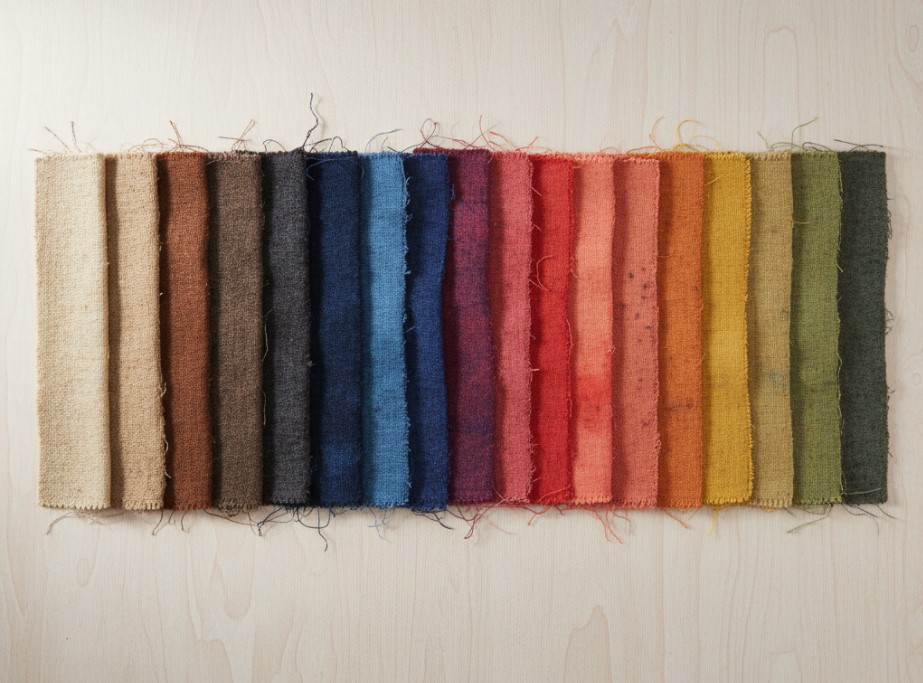
There's a moment when you unwrap an eco print, when you peel back the fabric from the bundled leaves that have been steaming for an hour, and you find the ghost of a leaf pressed into silk with a precision that would take a printmaker twenty minutes and a press to reproduce. The veins. The outline. Sometimes even the texture. The plant has printed itself.
The technique has been practiced in various forms for centuries, but the modern revival of eco printing as an intentional art form is closely associated with Australia-based artist India Flint, who developed and named the process in the early 2000s and published the foundational book "Eco Colour" in 2008. Her work showed what was possible beyond the simple tannin prints that craft traditions had used for generations: layered, complex, unpredictable images that changed every time.
How It Actually Works
Eco printing relies on the natural chemistry of leaves: their tannins, their chlorophyll, their iron content (drawn from the soil), and their mordanting compounds. When you press a leaf onto wet fabric and apply heat, the compounds in the leaf migrate into the fiber. The result depends on so many variables, the specific plant, the mordant in the fabric, the mineral content of the water, the temperature and duration of steaming, that no two prints are identical even from the same bundle.
The fiber matters enormously. Protein fibers, wool and silk, accept plant compounds readily. Cotton and linen are more resistant and usually require a tannin pre-treatment to provide bonding sites. Silk tends to produce the crispest, most detailed prints, with a clarity that makes the leaf's structure visible down to fine venation.
Mordants shift the colors dramatically. Iron mordant produces grays and blacks and deep greens: eucalyptus leaves on iron-mordanted silk give a palette of charcoal and russet and sage that looks like a Victorian botanical illustration. Alum produces warmer, more orange-bronze tones. Copper gives blue-greens. The same leaf on the same fabric with different mordants produces completely different images.
Modernhaus follows the thread from raw fiber to finished fabric.
Explore the Textile Studio →The Plants That Work Best
Eucalyptus is the plant that first made eco printing famous, partly because India Flint works in Australia where it's ubiquitous, and partly because it genuinely works extraordinarily well. The leaves are rich in tannins and produce strong, clear prints in a range from gold to deep russet. Different eucalyptus species give different colors: some go orange, some go gray-green, some print very dark.
Japanese maple leaves print beautifully, especially in autumn when the tannin content shifts. Rose leaves give pale, warm prints. Oak produces strong tannin reactions. Sumac leaves, which are themselves a natural dye source, print in the warm gold-orange range.
Not every leaf works. Soft, high-water-content leaves often produce faint or disappointing prints. Old, dry leaves can work better than fresh ones because the compounds are more concentrated. Part of eco printing's appeal, and part of its frustration, is that there's no reliable formula: you learn by doing, by comparing bundles, by keeping notes on what the plants in your particular garden with your particular water and your particular mordanting practice actually produce.
The History Behind the Revival
The idea of plants leaving impressions on fabric is not new. Nature printing, pressing plants between inked plates to produce botanical illustrations, was practiced in the fifteenth century. Cyanotype photography, developed by Anna Atkins in the 1840s, used photosensitive paper and direct plant contact to create "photograms," which are structurally related to eco printing.
In Asian textile traditions, katazome and other resist-print techniques used botanical stencils and pastes. Japanese shibori sometimes incorporated organic materials as part of the resist structure. The specific technique of direct steam-contact printing with whole leaves, however, is largely a contemporary development, and the vocabulary and pedagogy around it, the systematic exploration of which plants with which mordants on which fibers, has mostly been developed in the past twenty years.
What You End Up With
An eco-printed piece of fabric is not reproducible. You can approximate it, you can work in series, you can develop a recognizable personal palette, but the specific combination of leaf chemistry, mordant, and heat that produced one particular print can't be exactly repeated. This is either a feature or a flaw depending on what you want from textile practice.
For work that engages with natural dyeing as a whole, eco printing sits in an interesting position: it's more directly connected to the specific plant than vat dyeing, more about the individual object than the consistent dye bath. The leaf that printed your silk was a specific leaf, from a specific tree, on a specific day. That specificity shows.
What it produces, at its best, is something that looks inevitable, as if the plant was always going to make that mark on that cloth, as if you just provided the conditions and got out of the way.