Harry Bertoia: The Man Who Made Furniture From Air
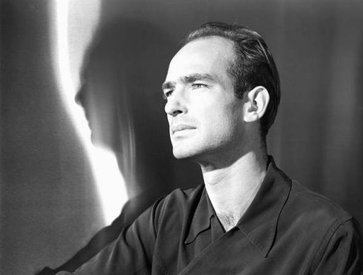
Harry Bertoia bent a piece of wire and sat on it. That sentence sounds absurd until you understand that it produced the Diamond Chair, furniture that is 80% air and 20% steel. The wire held. Then, years later, it started making music.
Before 1952, chairs were solid objects. You needed wood or molded plywood or upholstery to support a human body. Bertoia took industrial welding wire, formed it into a basket shape, and discovered that you could eliminate almost all the material and the structure still worked. Better than worked: the emptiness was the whole point. "If you look at these chairs," he said, "they are mainly made of air, like sculpture. Space passes right through them."
Knoll has manufactured that wire basket continuously since 1953. The structure hasn't changed. The jigs that Bertoia and two Knoll engineers built to make it are still in use.
The Fifteen-Year-Old From Italy
San Lorenzo, Italy, 1930. Harry Bertoia was fifteen when his brother Oreste sent for him to join him in Detroit. He enrolled instead at Cass Technical High School, a public school with a program for gifted art students, and learned jewellery making from three metalwork teachers. By 1937 he had a scholarship to the Cranbrook Academy of Art.
That's where the connections formed that would define mid-century modern furniture. Charles and Ray Eames studied there. Florence Knoll (then Florence Schust) studied there. Eero Saarinen's father Eliel ran the place. When World War II made metal scarce, Bertoia taught jewellery design because jewellery uses almost no material. He made wedding rings for Ray Eames in 1941.
After the war, Charles Eames invited him to California to help solve production problems with their molded plywood chairs. Bertoia learned welding at Santa Monica College. He figured out how to bend plywood into compound curves without warping. The techniques that made the Eames LCW possible came substantially from Bertoia's hands. Charles Eames took institutional credit for all of it. Bertoia received nothing and left in 1946.
Modernhaus documents mid-century modern design history in one place.
Explore the Design Archive →When Your Boss Says Make Whatever Interests You
In 1950, Florence Knoll called Bertoia. She'd studied at Cranbrook with him in the late 1930s. The proposal: move to Pennsylvania, set up a metal workshop, experiment with whatever he wanted. No quotas, no interference. And unlike the Eames arrangement, Bertoia's name would be on everything he designed.
Knoll set up the workshop in Bally, Pennsylvania. Bertoia started bending wire. He used his own body as the template: sitting in different positions, testing what angles felt stable, what shapes held weight without collapsing. By positioning rods correctly, you could create a surface that was mostly empty space but still supported a person.
The first Diamond Chair had a double-wire rim around the seat edge. Problem: Charles and Ray Eames had already patented that exact edge construction for Herman Miller. Herman Miller sued. Herman Miller won. Bertoia redesigned the rim as a single thicker wire, grinding the grid wires at an angle where they met it. That's how every authentic Bertoia chair has been made since 1953. The design change forced by a lawsuit became the authentication marker seventy years later.
A Knoll Diamond Chair today retails around $1,200 to $1,800. Each one requires approximately forty individual welds. The wire gauge, the grid spacing, the angled cuts where grid wires meet the rim frame: these are the details that separate an authentic Knoll from the replica market, which runs to an estimated $400 million annually in Bertoia-style furniture.
Florence Knoll Was Right About Credit
Bertoia completed the Diamond Chair, Side Chair, Bird Chair, bar stools, and bench between 1950 and 1952. The collection launched in December 1952. The royalties generated enough income to buy his Pennsylvania farmhouse and stop designing furniture entirely.
That happened because Florence Knoll had learned from what the Eames situation had cost everyone. Give full credit. Pay fairly. The result: Bertoia had his name on the work and enough financial freedom to spend the rest of his life as a sculptor. Knoll had exclusive manufacturing rights forever. Both parties got what they actually wanted.
Bertoia created over fifty major public sculptures after the furniture work. Eero Saarinen hired him to design the altar screen for MIT's chapel in 1955, a sculptural piece that cast different shadows depending on the time of day. The financial independence the Knoll royalties gave him was the condition of all of it.
The Day the Sculpture Started Singing
Mid-1950s. Bertoia was working in his Pennsylvania barn on a metal sculpture. A gust of wind hit it. The rods vibrated against each other and produced a clear musical tone that lasted for minutes. Not random noise: an actual note. He stopped working and listened.
Different metals produced different frequencies. Brass sounded different from bronze. Beryllium copper had its own character. Rod thickness changed pitch. Rod length changed tone. If you drilled holes in a flat metal plate and hung vertical rods in rows, you could make an instrument that anyone could play. Touch it and it rang. Let the wind hit it and it made music without anyone.
Bertoia started making sculptures designed specifically for sound. He called them Sonambient. They split into three types: tonals (vertical rods in grids that chimed when moved), gongs (flat metal plates struck with custom mallets), and singing bars (thick suspended rods that reverberated off each other). He converted his barn into a concert hall, filled it with around a hundred sound sculptures, installed microphones, and started recording.
Between 1970 and 1978 he released eleven albums, all titled Sonambient. His brother Oreste, who had originally brought him to America, played the sculptures with him. Brian Eno used Bertoia's sound sculptures in a 1998 London installation. Jacques Cousteau heard the gongs and said they sounded exactly like whales.
He was diagnosed with cancer shortly after recording the first album. He died in 1978. The final ten albums arrived at his farmhouse after his death. He never heard them as finished products.
What the Barn Still Holds
Bertoia's son Val maintains the Pennsylvania farmhouse and barn exactly as his father left it. Microphones still hang from the ceiling. Val continues making sound sculptures using his father's techniques. The barn has become a kind of pilgrimage site for people who discovered the Sonambient recordings through Brian Eno or through the sound art world.
Important Records reissued all eleven albums as a box set in 2016, then ran a Kickstarter to fund vinyl reissues and the digitisation of 360 reel-to-reel tapes Bertoia left behind. The tapes represent hours of unreleased recordings: concerts in the barn, experiments with different sculpture combinations, attempts at compositions that never reached album form.
The furniture is still in production. Knoll introduced the Asymmetric Chaise in 2005, a prototype from 1952 that had never been manufactured, and it sold out immediately. The jigs Bertoia built in 1952 are still being used. Sixty-plus years of chairs, each one approximately forty welds, each one still mostly air.
The chairs hold weight because Bertoia worked out where to put the steel. The barn makes music because he worked out what the steel wanted to do when the wind found it. Both things are true at the same time, and both came from the same willingness to sit with a material until it told him what it could be.